
Keeps insects out
Tight, undamaged screen keeps mosquitoes, no-see-ums and other pests out of your pool area or lanai.
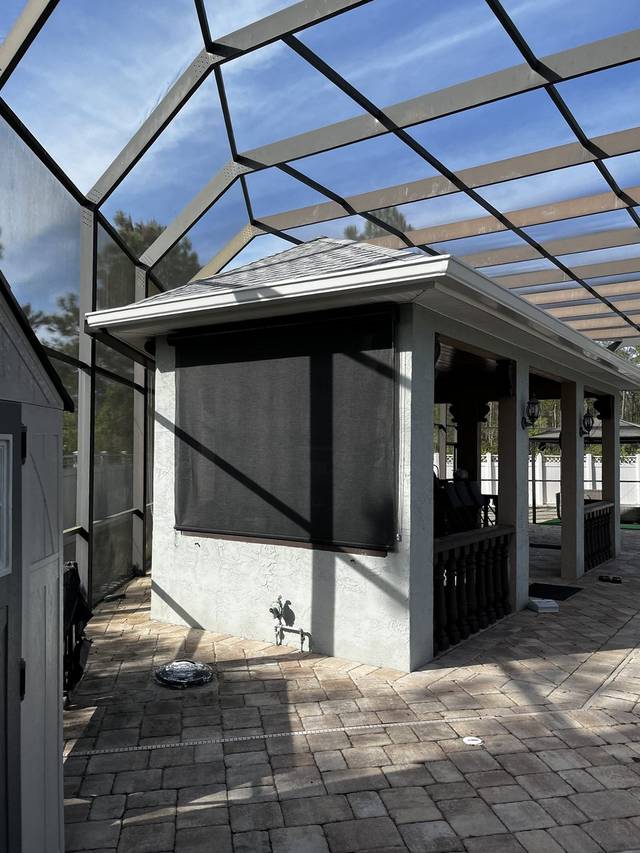
A pool cage or lanai enclosure is an aluminum frame covered with screen. The screen is held in the frame channels by a flexible spline. When screens tear, sag or fade, they stop doing their job and can let insects through.
Industry guides describe screen life in a wide range. Low-grade mesh can wear out in as little as 3 to 5 years, standard fiberglass often lasts around 5 to 10, and premium or polyester screens can last longer. A general guideline is to rescreen every 7 to 12 years, sooner near the coast and often longer inland.
The common causes of wear in Florida are strong UV, salt air near the coast, storms and wind, pool chemicals, and humidity.
Tight, undamaged screen keeps mosquitoes, no-see-ums and other pests out of your pool area or lanai.
Fresh screen looks cleaner and lets air flow through.
Fiberglass, polyester, pet-resistant and coastal-grade screens each suit different needs.
Fixing a torn panel early is easier than letting the tear grow.
Maintaining the screen and frame extends the life of the whole enclosure.
Checking and repairing screens and fasteners before the heavy season helps the enclosure hold up.
We look at the screens, splines, fasteners and the visible condition of the frame.
We discuss fiberglass, polyester, pet-resistant and other options and match one to how you use the space.
Each panel is measured so new screen can be cut to size.
Worn screen and spline are pulled out of the channels.
New screen is pulled tight across each panel and the spline is set in the channel.
Excess screen is trimmed and the panels are checked for tension and tightness.
We give you a free written estimate after we see the home, so you know the number before any work starts.
Rinse the screens periodically, inspect them every few months, and repair small tears promptly. Regular cleaning and prompt repairs help the screen and frame last longer.
We provide this service for homes in Brevard County, Orange County, Osceola County and Polk County. Each county page lists the communities we serve there, with local notes for homeowners.
General information on this page comes from these industry and manufacturer sources. Details on your home depend on the home itself, which we look at in person.